Laser Tube and Sheet Cutting Services
Process Overview:
Laser cutting service is a processing technology that uses high-energy laser beams to accurately cut metal or non-metal materials. It is suitable for precision processing of pipes (round, rectangular, special-shaped pipes) and plates (flat metals). Its core advantages are non-contact, high precision, and strong flexibility, and it is widely used in the field of precision manufacturing.
Laser Tube Cutting
From simple mounting holes to ornate architectural details, precision is critical. Laser tube cutting allows for clean cuts that meet the drawings every time.
Technical Core:
Laser Cutting Principle: The high temperature generated by the focused laser beam melts or vaporizes the material, and the cutting is achieved with auxiliary gases (such as oxygen and nitrogen).
Equipment Type
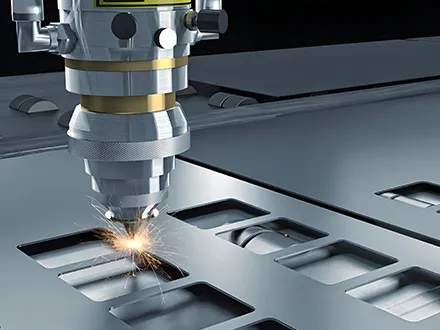
| Plate Cutting: fiber laser cutting machine (Maximum size 2500*8000) |
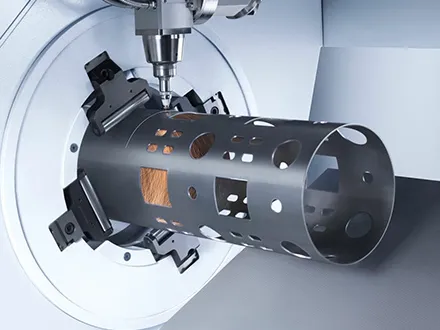
Pipe Cutting: three-dimensional laser cutting machine (maximum diameter D300 |
Steel Tubing Supplier for Many Industries
Furui Hardware provides tube laser cutting services for a broad range of industries, including but not limited to:
CNC Equipment Industry
Electronics Industry
Automotive Industry
Construction Industry
Types of Laser Tube Cutters
The main types of laser tube cutting machines vary based on application and laser type. Combination tube/flat sheet laser cutters are one of the most common machines used for laser tube cutting, but are generally used for smaller jobs and are multipurpose machines (i.e. they can also cut flat parts). Self-contained laser tube cutters are dedicated tube cutting systems that are only specified for tube cutting applications, where they can work with nearly any tube shape (round, rectangular, octagonal, etc.) in long stock lengths (3+ feet or more).
Depending on the needs of the project, laser tube cutting machines can use either fiber lasers or carbon dioxide lasers. Fiber lasers are compatible with a wide range of materials and are often considered the most versatile type of laser, while CO2 lasers are intended to be an upgrade to plasma cutters and are best suited for cutting specialty materials such as titanium due to their greater gas coverage than fiber lasers. Both lasers have comparable power levels. In either case, both cutting processes are well suited for metal fabrication and require no secondary processing.
Technical Advantages
Efficient Processing Capacity:
- Plate: cutting speed up to 60m/min (thin plate), single-shift capacity of 500㎡/day.
- Pipe: three-dimensional five-axis linkage cutting, single-piece processing time is shortened to 1/3 of traditional processes.
Wide adaptability of metal materials: Carbon steel, stainless steel, aluminum alloy, titanium alloy, copper alloy, etc.
Environmental protection and cost-effectiveness:
- No Pollution: There is no spark or smoke during the cutting process, which meets environmental protection standards.
- Material Utilization Rate: Intelligent typesetting software optimization can reach 95%, and waste materials can be recycled and reused.
Flexible Production:
- Small Batch Customization: Support single-piece order and quickly respond to non-standard designs.
- Mass Production: Automated production lines support orders of 100,000 pieces
Our Goal
Help customers gain competitive advantages in precision manufacturing, rapid iteration and cost control.